[Shader Suite] Occult Box — full shader suite and diagnostics
- dastardlyrat
- Topic Author
Less
More
22 hours 26 minutes ago #1
by dastardlyrat
[Shader Suite] Occult Box — full shader suite and diagnostics was created by dastardlyrat
Occult Box
A ReShade shader collection for depth analysis, image correction, stylized lighting, screen-space shading and visual experimentation.
A ReShade shader collection for depth analysis, image correction, stylized lighting, screen-space shading and visual experimentation.
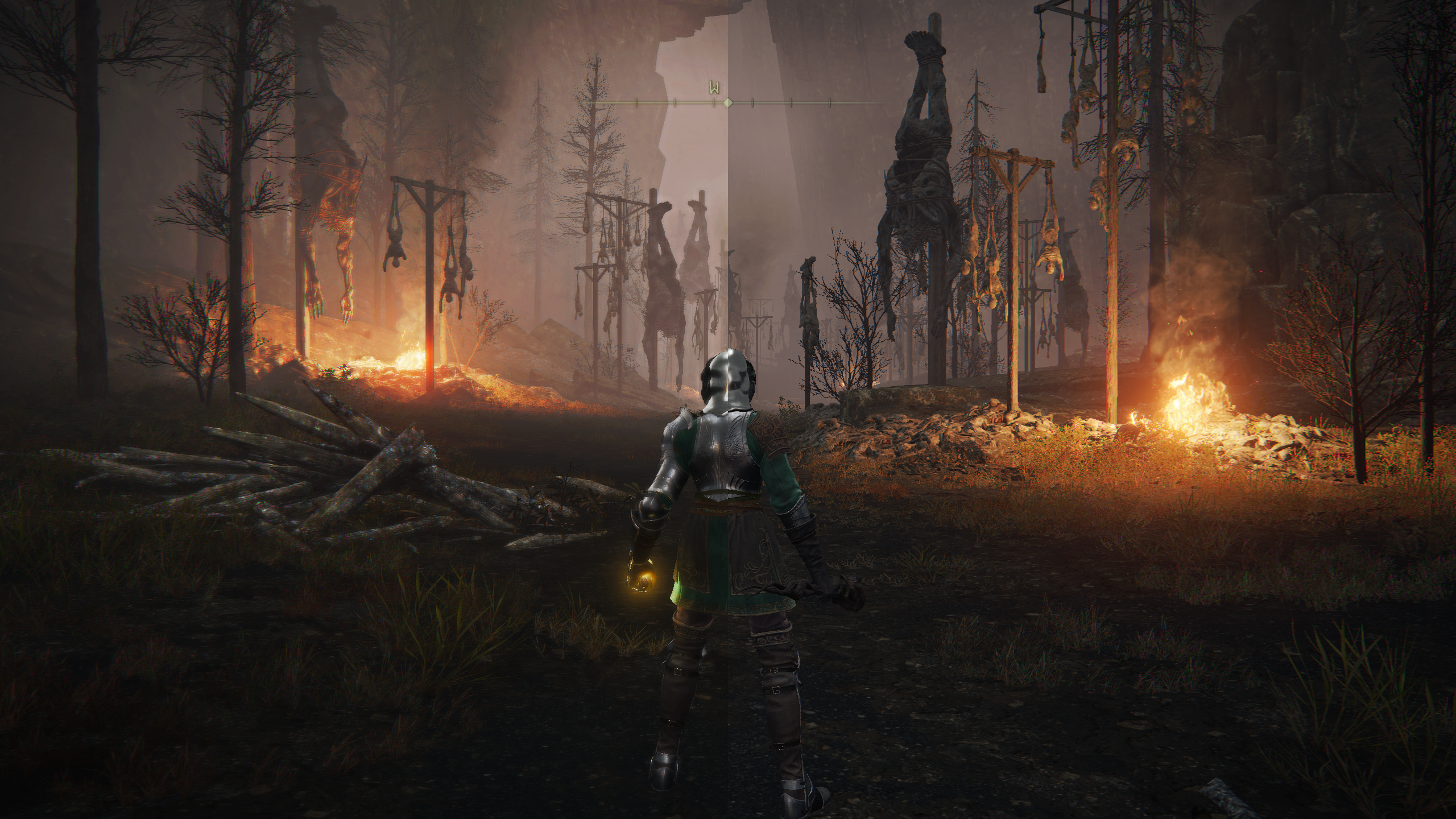
The same scene and viewpoint. Left: no effects. Right: Occult Box effects enabled.
What is Occult Box?
Occult Box is a collection of 35 ReShade effects organized into five families. It ranges from compact effects that can be dropped into an ordinary preset to larger diagnostic and experimental systems for studying depth, normals, continuity, lighting and screen-space reconstruction.
The collection is intended to be useful as both a practical shader suite and a visible analysis toolbox. Wherever possible, masks, confidence values, intermediate buffers and failure cases can be displayed instead of being hidden behind the finished image.
The five included families are:
- Black Wand — 20 focused, single-pass effects covering antialiasing, ambient occlusion, bloom, color processing, detail recovery, denoising, hatching, lighting, reflections and diagnostics.
- Book of Death — nine larger named effects and analysis tools: Blue Smoke, Crooked Tongue, Crystal Mass, Death Gaze, Fools Gold, Golden Hour, Obsidian Mirror, Potting Clay and Spirit World.
- Depth Oracle — a depth and normal diagnostic harness for examining the official ReShade depth path, manual decoding candidates, continuity, confidence and bounded fallback behavior.
- Golden Weave — two experimental screen-space lighting systems: a compact primitive version and a larger multi-pass redux.
- Legacy Lenses — three retained experimental shaders exploring hatching, mask construction and alternative sampling layouts.
Black Wand
Black Wand is the most immediately practical family. Its effects are deliberately narrow in scope so they can be tested, ordered and tuned independently.
The family includes smart antialiasing, depth-aware AO, three-band bloom, tone and detail tools, denoising, GI-style color bleed, screen-space gloss and sheen, hatching, reflection experiments, depth guards and several diagnostic views.
The intent is not to hide every artifact automatically. Many effects expose the masks or signals responsible for their result so that a preset author can see why an effect is responding to a particular surface.
Book of Death
Book of Death contains the more elaborate constructions. These shaders combine multiple visual ideas or use a named presentation around a specific analysis problem.
Some are primarily artistic, while others behave more like visual servers: they expose intermediate interpretations of the image that can help with tuning, debugging or developing another effect.
This family is the place to look when the smaller Black Wand effects are too constrained for the experiment being attempted.
Depth Oracle
Depth Oracle was built to make depth-related assumptions visible.
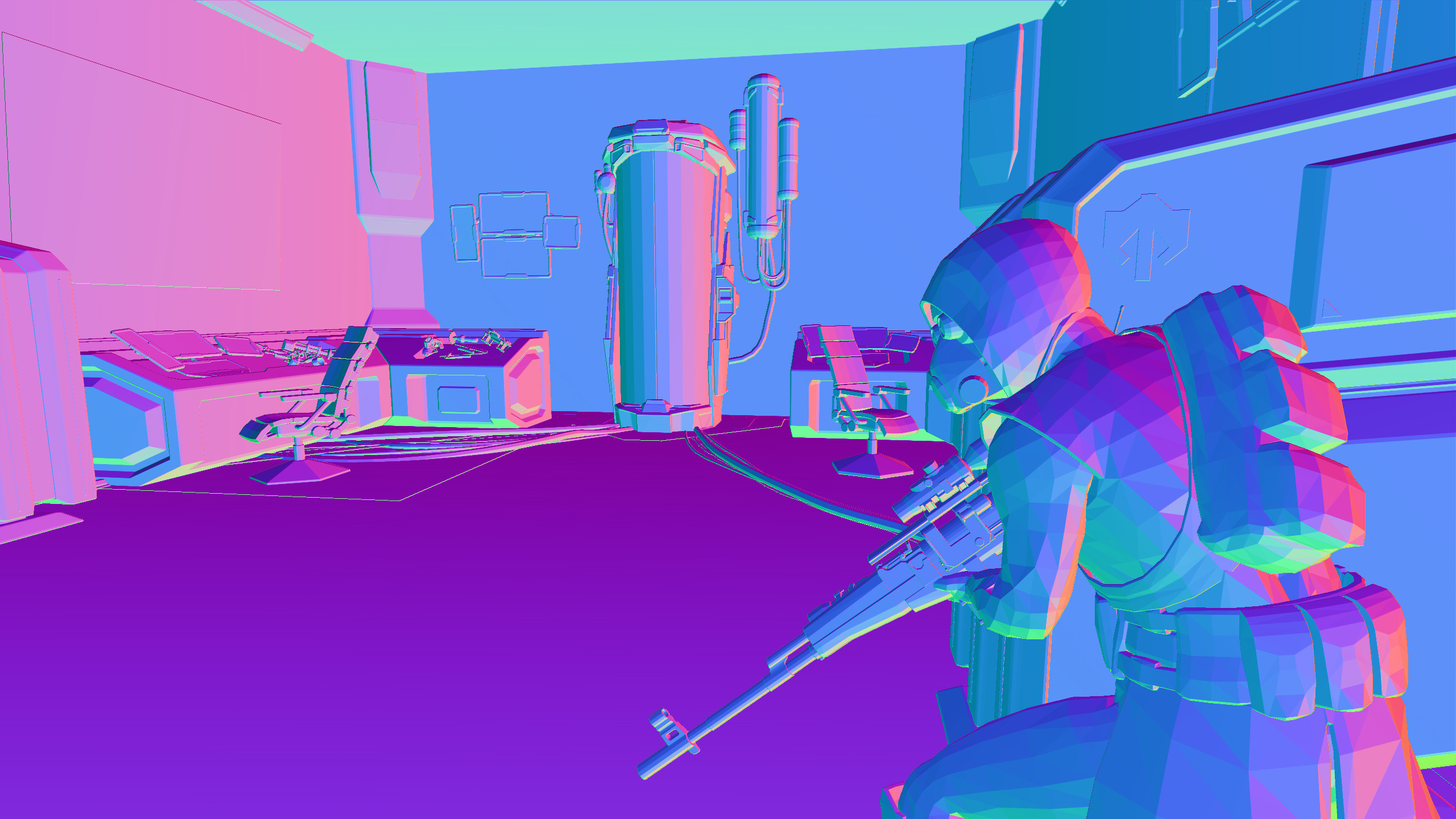
It can display the source image, official linear depth, manual depth-decoding previews, reconstructed normals, continuity probes and confidence views. It also contains bounded luminance-derived fallbacks for cases where usable scene depth is unavailable.
Those fallback views are treated only as image-derived surrogates. They are not presented as recovered scene geometry or ground-truth depth.
The official ReShade linear-depth result remains the reference path. Manual decoding exists to diagnose configuration and interpretation problems rather than to silently replace the official result.
ReShade and DisplayDepth credit
Depth Oracle owes an important methodological debt to ReShade and DisplayDepth.
DisplayDepth was created by CeeJay.dk and has received many updates and additions from the ReShade community. Its ability to make depth configuration and failure states visible is an important lesson for anyone building depth-dependent effects.
Occult Box was developed through what I describe as a meta-meta analysis. The question was not “why did the original authors choose this exact technique?” because source code alone cannot establish every authorial reason.
Instead, the analysis considered:
- which observable techniques were used;
- what practical purpose each technique served;
- what information those choices exposed;
- which gaps and failure modes remained visible;
- and which additional capabilities those choices made possible.
Occult Box then selected its own features and implementation techniques around its own goals, while deliberately accounting for the traps and blind spots revealed by that analysis.
Depth Oracle is an independent implementation. It does not copy DisplayDepth’s prose, labels, function names, pass names or code structure.
DisplayDepth source:
github.com/crosire/reshade-shaders/blob/slim/Shaders/DisplayDepth.fx
Golden Weave
Golden Weave explores bounded screen-space lighting and GI-like reconstruction.
The Primitive version is a compact single-pass build with explicit budgets, guards and diagnostic controls. The Redux version expands the idea into nine passes and divides work into bounded batches to remain practical for ReShade’s shader compiler.
These effects are screen-space approximations. They cannot recover hidden geometry, off-screen information, original material properties or the game’s actual lighting solution. Their result should be understood as a reconstruction from the buffers and image information available to ReShade.
Installation
1. Download or clone the repository.
2. Copy the desired Occult Box families into a ReShade shader effect search path.
3. Preserve each family’s effects and header directories.
4. Make sure recursive effect scanning is enabled and ReShade.fxh is available.
5. For depth-dependent effects, configure a usable depth buffer before judging AO, reflections or lighting reconstruction.
For a first run, I recommend enabling black_wand_DepthOracle before anything else. Check the official depth, normal and confidence views, correct any depth-buffer problem, and then enable other effects one at a time.
Current scope and limits
The public repository contains the five release families and excludes the development-only rm_library and rm_production trees.
The repository has been statically checked for its local include graph and effect catalog. That is not the same as claiming that every possible driver, game, API, resolution and ReShade configuration has received live validation.
Performance varies significantly between the compact Black Wand effects and the larger multi-pass experiments. Debug views and one-effect-at-a-time testing are strongly recommended when building a preset.
Download and source
github.com/dastardlyrat/Occult-Box
Feedback is welcome, especially reports that include:
- the game and rendering API;
- the ReShade version;
- the selected depth buffer;
- the effect and technique name;
- a screenshot of the relevant diagnostic view;
- and any compiler error text.
I am particularly interested in cases where Depth Oracle exposes a configuration or continuity problem clearly but another Occult Box effect does not yet respond to it gracefully.
Please Log in or Create an account to join the conversation.
